Wednesday, May 9

Highlighting Charities

It's been awhile since my last post! Things have been pretty crazy on my end, what with school winding down and graduation fast approaching. This week I finished high school forever. It seems almost unreal—I am finally and definitively leaving behind a major part of my life. I was so excited to find out a couple of days ago that I've been named valedictorian of my class. As I've been brainstorming for my valedictory speech, I've reflected on everything that high school has meant to me, and on everything there is to come. And a thought occurred to me, something that is often on my mind: I've been lucky enough to have had 16 years of quality education so far, and I have at least four more years of college ahead of me. This is a privilege that millions of children around the world will never know. This thought saddens me, but more than that, it inspires me to make good use of my own education in every way I can. As my valedictory—as my final farewell to high school—I would like to promote several different charities and organizations who are working diligently to make this world a better place for children and all people everywhere.

Connecther:

“Connecther matches donors with projects that are helping women and girls in their quest for self-reliance. Because women and girls suffer most from poverty, at Connecther, we believe the benefits of helping women and girls to become self-reliant has tremendous impact. In the eight months since we've launched, Connecther has partnered with 40 501c3 nonprofits that have added 23 projects helping women and girls! Some examples are Hope for Senegal, where for as little as $25, a girl can receive a scholarship to attend school in Senegal; Vanavevhu helps child head of households in Zimbabwe (as daunting as this sounds, when parents die of AIDS in some countries, the oldest child needs to have a form of income to take care of the rest of the family); Grassroot soccer provides a project on Connecther that runs an all-girls soccer club which helps empower girls and reverse entrenched gender roles, which is key to combating the AIDS epidemic in South Africa. Two of Connecther project partners, Partners in Health and the Edna Adan Hospital run maternal mortality reduction projects for young women in Africa. Many women die of causes that could be prevented if they had access to skilled delivery assistance and emergency obstetric care.”

- Lila Igram, Connecther Founder

Connecther matches donors with projects that are providing
services to women and children in developing communities
(Photo from Connecther.org)

Hope-2o:

Hope-2o and I partnered up to raise money for the Girl Effect
Hope-2o is an organization whose mission is “to eliminate the use of plastic water bottles by giving every individual in the United States a stainless steel water bottle.” Hope-2o forms partnerships with other organizations or individuals whose missions they support to create customized stainless steel water bottles. These water bottles are sold on Hope-2o's website, and profits from the bottles benefit both Hope-2o and their partner charity or organization. A couple of months ago, President Peter Hall contacted me after seeing my “It Only Takes a Girl” video, suggesting that we partner up and make these awesome water bottles to raise money for The Girl Effect and Hope-2o. Other great causes, such as Hope to Haiti, Earth Day, and UrbanPromiseInternational, have also joined forces with Hope-2o to sell great water bottles to reduce plastic waste and support a worthy cause.

Girls Learn International:

Girls Learn International gives American students a voice in the movement for universal girls’ education. The GLI Program supports the empowerment of American students as they discover that through their own creative initiatives, dedication, and passionate leadership, students can create real solutions that address the obstacles facing girls and women in developing countries and be leaders in the movement to affect positive change for girls and women worldwide.

“Girls Learn International has 85 Chapters at middle schools and high school throughout the US. GLI Chapters learn about human rights and issues that contribute to discrimination against girls. After they are up and running for a while they are matched with a partner school in a developing country where girls still lag behind boys in access to education. Chapters communicate with their partner schools throughout the year. Chapters also hold a big event in spring semester to raise awareness in their communities, and raise money for GLI partner schools.” 

- Ashley Steimer-King, Program Director

The Fistula Foundation:

Obstetric fistulas are the most devastating and serious of all childbirth injuries. It happens because most mothers in poor countries give birth without any medical help. So many are young girls. Complications from pregnancy and childbirth are among the leading causes of death and disability for women of reproductive age in these places.

$85 can help provide nursing care for one patient
(Photo from FistulaFoundation.org)
After enduring days of agonizing, obstructed labor a woman's body is literally broken by childbirth. During labor contractions, the baby's head is constantly pushing against the mother’s pelvic bone — causing tissue to die due to lack of blood flow to this area. All of that pushing creates a hole, or in medical terms a "fistula," between the birth passage and an internal organ such as the bladder or rectum. A woman cannot hold her urine, and sometimes bowel content as well. Her baby is unlikely to survive. If she survives, a woman with fistula is likely to be rejected by her husband because of her inability to bear more children and her foul smell. She will be shunned by her community and forced to live an isolated existence. These women suffer profound psychological trauma resulting from their utter loss of status and dignity, in addition to suffering constantly from their physical internal injury.

The numbers are staggering. Right now, hundreds of thousands of women are suffering from this heartbreaking, treatable childbirth injury because they are too poor to afford surgery that costs about $450. This number keeps growing bigger. Each year approximately 100,000 women develop this childbirth injury—or 273 each day. The international capacity to treat fistula patients has been estimated at 6,500 a year—or 18 patients each day. Surgeons would describe this as an enormous backlog of untreated patients. There is clearly an overwhelming need for treating far more women.

The Fistula Foundation believes that no woman should have to suffer a life of shame and isolation for trying to bring a child into the world. We are dedicated to raising awareness of and funding for fistula repair, prevention, and educational programs worldwide to help eradicate fistula.

For more information, please read this print-friendly document about obstetric fistulas.

More Than Me:

With a little help, the girls in Liberia can do it.
"I live and work in Liberia, West Africa which just so happens to be the 3rd poorest countries in the world and a close relative of America. It's kinda nuts, 60% of the kids are out of school and more than half of them are girls. When I asked moms why they don't put their girls in school they tell me they don't have any money. School is kinda free, but not really. The government is poor and can't quite pay the teachers, so they end up volunteering and don't show up a lot of the time. It's also kinda dangerous because there is something called, 'sex for grades.'

We help young girls get off the street and into school from one of the world's most notorious slums, 'West Point.' We target child prostitutes and girls at extremely high risk of being sucked into that life, i.e. their moms already have been. We bribe them to do well in school, and it actually works; 10% are first in their class! The problem is that after school, they go back to the dangerous slum where they are at risk again. I was completely horrified to find out just a month ago that there was an attempted rape of one of our 10-year-olds. Unfortunately, this is somewhat normal and I'm committed to do whatever it takes to STOP IT! 

After talking to the girls, the community and the school where the girls go we decided we need to build a girls center to keep them safe after school. It will serve 500 children. They will learn beading, sewing, baking and other things they can use to make money. We'll also teach them cool things like how to use computers, the internet and social media. We'll have social workers and tutors to help them with their homework. A place like this that will help 500 girls is only $100,000 to build and run for a year and will only cost $40,000 a year to maintain!

We get little girls off the street and into school in one of the world’s most dangerous slums in the world in Liberia, West Africa. We work with community leaders to identify the girls who are at the highest risk of being sexually exploited to ensure that education and opportunity, not exploitation and poverty, defines their lives. We pay tuition, provide school lunch and we work with the school and community to make it impossible for her to fail. And it's working."

- Katie Meyler, Founder
A girl who started selling herself at age 10, and who is now at the top of her class

Traffickd.org:

Traffickd.org is a centralized reporting mechanism for instances of human trafficking. It is currently available on a variety of media, so that no matter who you are, where you are, or what language you speak, you are able to identify trafficked people to relevant organizations and increase the possibility of emancipation. Several countries have country-level reporting systems, but if someone doesn't already know the appropriate organization for whatever country they happen to be in, traffickd.org avoids the need to research it, and forwards information to the correct group. Given that often people are trafficked across borders, this is of vital importance.

If you have an organization that shares a range of values with traffickd.org, you could become part of the "traffickd.org" alliance in these ways:

A link to traffickd.org from your website - 
Traffickd.org will be most effective if it is easily discovered by people. As such, a link-back would be of benefit in two ways: firstly, through contact with visitors to your site, and secondly because the more websites that link to traffickd.org, the higher it will appear in search results on engines such as Google. This will facilitate the process of locating the site, reporting trafficking, and therefore emancipation of trafficked people. This link could accompany the traffickd.org logo, a description, or stand on its own.

A link to your site from traffickd.org, and logo on our "Alliance" page
 - As part of the traffickd.org alliance, we would show your proud logo with a link back to your site on the traffickd.org "Alliance" page.

Connections to other anti-human trafficking organizations
 - If you already have connections with anti-human trafficking groups or organisations, we would very much appreciate your letting us know of this connection. In an area such as trafficking, which is so prone to corruption, the approbation of an organisation by a traffickd.org alliance member would help to improve quality control. This in turn would improve the traffickd.org service overall.

Connections on social media - 
If your organisation has a profile on social media such as Facebook or Twitter, we would appreciate your connecting with traffickd.org's Facebook and Twitter. This too would help to raise awareness of the site and improve the possibility of emancipation for victims of trafficking.

LitWorld:

Be the LitWorld story. (Photo from LitWorld.org) 
LitWorld believes that literacy is a human right and key to improving the lives of millions of girls and women around the world. Worldwide, 793 million people are illiterate, and two-thirds of those are girls. People with lower literacy skills are far more likely to suffer the consequences of working and living in unsafe or dangerous environments, and they often die earlier from preventable causes. All over the world, children are hungry for learning and for the power it brings. Research shows that children learn to read and write best by writing and telling the stories of their own experiences. Yet it is rare to find safe spaces where children feel fully comfortable to do so.

LitWorld is changing that. LitWorld’s mission is to use the power of story to cultivate literacy skills in the world’s most vulnerable children. LitWorld advocates for literacy as an urgent human right that belongs to every child. LitWorld stands on three Core Pillars: Education, Advocacy and Innovation. These pillars together create a complete approach to how we can impact outcomes for the world’s children and help them become fully engaged citizens. All children have the right to read, to write, and to share their words to change the world.

Note: Most of the information in this blog post comes directly from the websites of these organizations.

Wednesday, March 14

The Essay

As some of you may know, I originally created my video for a scholarship application to Tulane University in New Orleans. If you are interested in more details about how and why I created the video, please check out my interview with teen website PopCosmo.com.

Well, good news... I got the scholarship! The official name for the scholarship is the John Hainkel Louisiana Scholars Award, and it is basically a full ride to Tulane. I am SO excited to attend Tulane starting next fall, where I hope to study public health, journalism, and Spanish, among other things.


The scholarship application also required that an essay be submitted along with the project; so, without further ado, I would like to share with you that very essay:

My mom and I were in a stationery shop; I was five years old. While she was going about her boring grown-up business, I was wandering around the store admiring the pretty trinkets. My sight fell on something unexplainably but undeniably beautiful: a little, pink velvet pillow. My five-year-old self was in love. Please buy it for me, Mommy, I begged. She refused. However, she told me, if you save your own money, I will bring you back here, and you can buy it. I had never bought anything with my own money before. I didn't even know how I would get money. But the elegant little pillow was irresistible: I imagined a glass slipper resting on it, or perhaps a sleeping fairy. I would find a way to save money, and I would have the pillow.

I saved every dollar, every quarter, every dime I earned. After several weeks, I had saved six, maybe seven dollars. I had never had so much money of my own in my life. I'm sure my mom had expected me to forget about the pillow after a few days, but I couldn't stop fantasizing about its magical potential. One night, she came into my room and sat on my bed. Gabriella, she said, I know you have been doing a really good job saving your money to buy that pillow. But I want to tell you about another way you could spend your money. Of course, it is totally up to you—it is your money, and you can spend it however you like. But I thought you might want to know about this. She read me an article about a Jewish organization that took small donations and sent them to a synagogue in Ethiopia. There, the synagogue community used the money to buy meals for the children in their congregation. When she finished explaining that my money would probably be used for a girl about my own age, I immediately got out of bed, gathered my small fortune, and handed it to my mom. I want to pay for a girl's lunch, I said. I have a lot of pillows.

Agernesh in front of her synagogue 2000
Concern for the health of girls around the world has always been a part of me. No other global or local issue touches me like the horrors of child marriage, human trafficking, or female genital mutilation. These abominable yet socially acceptable practices in many developing countries are not only a gross violation of human rights, but they also represent the deeply held cultural belief that women are inherently inferior to men.

More than anything, I want education for every girl and woman on this planet. I truly believe that if you educate a girl, you educate a nation. Since I was one year old, I have attended the school founded by my dad's parents in 1965. My Aunt Karen taught me in the two-year-old class; my Uncle Kurt was the groundskeeper at the elementary school; my Aunt Helen taught me AP Environmental Science, my Aunt Becca taught me AP Physics, and my Pop Pop taught me AP Chemistry. For me, school has never just been school. Education means family. Livelihood. Nurturing future generations and remembering past ones. I want to share this gift with the whole world.

The girl whose lunch I paid for twelve years ago sent me a photograph of herself and a short letter. Her name is Agernesh Sisay Askatach, and she was seven at the time. In the photograph, she is wearing a pink dress and no shoes, holding a little brown bundle, and standing in front of a small stone synagogue. I know I will probably never meet Agernesh. But my dream is to meet many girls like her and to give them what everyone on this planet deserves—even the poor—even the underprivileged—even girls:

Opportunity.

Thursday, March 8

Kony2012

Never doubt that a small group of thoughtful, committed citizens can change the world. Indeed, it is the only thing that ever has. 
- Margaret Mead 

This was certainly true for Jason Russell, Laren Poole, and Bobby Bailey, three young, energetic film students who, in 2003, traveled to Africa in search of adventure. There, they learned about a little-known, long-running war in which children were being abducted and turned into soldiers—sometimes even being forced to kill their own parents.

Many of you know by now what happened next. These guys started Invisible Children, an advocacy group that has created several documentaries and videos to bring attention to these children, including the wildly successful video that has almost 40 million views on YouTube at the time I am writing this. This video was powerful, shocking, and, in my opinion, quite informative, but like anything that gets significant attention, it has also gotten significant criticism: They don't have a plan for what to do after Kony is finally captured. They are only spending 32% of their money on actual aid. Joseph Kony isn't even in Uganda anymore. The video is misleading and oversimplifies the problem.

First of all, of course the video simplifies the issue—you can't get the attention of tens of millions of people if you have to explain every minute detail. However, those who saw the video and became interested can easily research this topic further on their own. While some of these attacks on the IC are blatantly untrue, others are a bit more complicated. Three of the criticisms against the Kony2012 movement in particular really struck a nerve with me.

1. The White Man's Burden
I have read several criticisms of Invisible Children and Kony2012, like this one, that mention that the movement is simply a product of the “White Man's Burden.” These critics present us with a sort of Catch-22: because we are white and privileged, we should feel guilty about the poverty and corruption in the third-world countries of Africa; however, it is wrong to try to help the people of these countries because of course we are only doing it selfishly to relieve our own white man's guilt.

I, for one, do not feel guilty about these problems because I'm white; in fact, I don't feel guilty at all. I feel angry. I'm angry that just because a child is born in Africa, she might have to live in fear of war, kidnappers, and AIDS; I am angry that Joseph Kony and his followers are abducting children from their homes, arming them with guns, and forcing them to kill; and frankly, I am angry that some people can justify ignoring these problems by claiming our aid is nothing more than the “White Man's Burden.” No, I do not feel some deep sense of guilt that I was born into a white, middle class family in the United States of America, and no, I am not outraged by Joseph Kony's horrendous war crimes just because the victims are African. Call me crazy, but these issues upset me because the crimes Kony is committing are crimes against humanity—against human beings—and I could really not care less what shade of brown their skin is.

2. Invisible Children is Just an Advocacy Group
I've seen and heard several complaints that the Invisible Children spends too much money on filmmaking and awareness and not enough on actual aid. First of all, the IC spends about a third of their money on “programs on the ground in LRA-affected areas that provide protection, rehabilitation and development assistance.” But more importantly, I don't understand why people are vilifying advocacy and awareness. As one blogger snarkily comments, “these problems are highly complex, not one-dimensional and, frankly, aren’t of the nature that can be solved by postering, film-making and changing your Facebook profile picture, as hard as that is to swallow.” I disagree. Kony2012's goal is to bring attention to these problems so that the government—and the world—do not ignore or forget about these invisible children. So if changing your profile picture will get your friends to start asking “Who is this Kony guy I've been hearing so much about?”, then I say do it.

The fact is, this video is getting people talking, starting a conversation. And that fact, in and of itself, is a good thing. These guys went to Africa, saw atrocities being committed, asked for support from Washington, and got no help. Then they started spreading the word about these children, got a significant following, and suddenly Washington paid attention. This is the truth about U.S. politics: politicians will listen if they think the people—their voters—care. And not just some voters. A lot of voters. So yes, the IC is amazing at spreading awareness, and yes, this is what a lot of their efforts go towards. I don't understand why this is such a bad thing. I'll admit, I have had an Invisible Children's club at my high school since before I can remember, and it wasn't until I saw this video that I really knew what it was or what it did. So say what you want about the IC or about Kony2012, but we can all agree on one thing—their message is being heard, and it's being heard loud and clear.

3. Why Aren't They Doing This, That, and the Other Thing, Too?
And finally, the criticism against Kony2012 that is just all too familiar is that the IC is focusing on the “wrong” issues or not addressing enough issues. When I posted my “It Only Takes a Girl” video a couple of months ago, I got critical comments complaining that I didn't talk about male circumcision, or I ignored problems concerning abuse and rape here in the U.S., or I didn't address boys' education, et cetera, et cetera, et cetera. My response to those people, and the similar critics of the Invisible Children, is this: one person, one organization, one video, cannot do everything. If you think combatting malaria in Africa is more important than stopping Joseph Kony, great. If you think cleaning up industrial waste and pollution here in the U.S., or eradicating polio, or fighting corruption in the Ugandan government is important—well, you're right. All of those things are important. But that doesn't diminish or disqualify the mission of the Invisible Children. Okay, so they aren't also addressing the issues of Nodding disease or the problem of oil. But these are simply not their mission—at least, not until they complete their current mission of bringing Joseph Kony to justice and providing a basis of support for the children of war. If you care about some other issue and think money should be spent on it instead, then start a charity, make an incredibly powerful video, and collect donations for your cause. But people simply cannot expect the Invisible Children to do it all.

I am all about asking questions and not just accepting things at face value, but I don't think the Invisible Children is the sneaky, devious organization people are making it out to be. Three guys went to Uganda and met a boy who was ready to die, and they made him a promise that they would do everything they could to help. No, it isn't because they are white, and no, they can't do everything. But they can do something—they can tell the world about these invisible children and make sure we never forget. In the words of American author, historian and Unitarian clergyman Edward Everett Hale:
I am only one, but still I am one. 
I cannot do everything, but still I can do something; 
and because I cannot do everything, 
I will not refuse to do something I can do.

Tuesday, February 28

Read of the Week: A Thousand Splendid Suns

I'm the kind of reader who meanders slowly through books—sort of “smelling every rose and daisy on the side of the road along the way” type of thing, if that even makes sense. Half the Sky, a book by Sheryl WuDunn and Nick Kristof that I can't recommend highly enough, took me approximately a month to read. I like to absorb every detail, taste each word and phrase individually and suck out every drop of meaning. I highlight, I annotate, I bookmark. Maybe it's because I borrowed Khaled Hosseini's A Thousand Splendid Suns from a friend (and therefore couldn't mark it up with my random thoughts and comments) that I devoured it so quickly. But I think the real reason I sped through it in just a few days is that it was simply impossible to put down. Each character was so vivid, so real. I was completely absorbed in their lives—their pasts, their hardships, and their shaky futures.

Many of you may know of Khaled Hosseini's masterpiece The Kite Runner. I have not yet had a chance to read this novel, but from what I understand, if you connected with Hosseini's clear, true, and heart-wrenching writing style in The Kite Runner, you will definitely enjoy A Thousand Splendid Suns as well. A Thousand Splendid Suns takes place in Afghanistan from the mid-1960's to the present day, following the lives of two girls, Mariam and Laila, as they endure war, ethnic strife, loss of loved ones, and abusive marriage. Hosseini shows the political conflicts in Afghanistan—the Soviet invasion, the Taliban take-over, and life after the Taliban—through the eyes of ordinary Afghani women.

The relationships—mother and daughter, father and daughter, husband and wife, young lovers and childhood friends—are what make this novel so incredibly powerful and poignant. Hosseini makes us fall in love with a character, then absolutely hate her, then fall even more deeply in love with her again. He makes us sob at the loss of a loved one, then sob again—with joy—at a beautiful reunion. He takes us on an emotional journey with the characters nearly as tumultuous as the political strife happening around them. The Los Angeles Times said it well: “[He] offers us the sweep of historic upheavals narrated with the intimacy of family and village life . . . What keeps this novel vivid and compelling are Hosseini's eye for the textures of daily life and his ability to portray a full range of emotions, from the smoldering rage of an abused wife to the early flutters of maternal love when a women discovers she is carrying a baby.”

Besides the beautiful intimacy of the story, A Thousand Splendid Suns also imparts important lessons about the status of women, and the status of the developing world in the eyes of first world nations like the U.S. One of the two central characters of the story is Laila, a fair-haired girl born in Kabul, Afghanistan. Laila's father Babi, a university-educated, modern Afghani man, tells his daughter that under the communists, “it's a good time to be a woman in Afghanistan. And you can take advantage of that, Laila. Of course, women's freedom—here, he shook his head ruefully—is also one of the reasons
From Flickr by liber(the poet)
people out there took up arms in the first place. By 'out there' . . . Babi meant the tribal areas, especially the Pashtun regions in the south or in the east near the Pakistani border, where women were rarely seen on the streets and only then in burqa and accompanied by men. He meant those regions where men who lived by ancient tribal laws had rebelled against the communists and their decrees to liberate women, to abolish forced marriage, to raise the minimum marriage age to sixteen for girls. There, men saw it as an insult to their centuries-old tradition, Babi said, to be told by the government—and a godless one at that—that their daughters had to leave home, attend school, and work alongside men.” (Hosseini 121)

This passage struck me as a powerful statement about how changeable a society can be if it loses sight of what is important. Before the Taliban, at least in the wealthier parts of Afghanistan, women were free. Not only that, they were respected, even treated as equals. When the Taliban commenced their reign, everything changed—women were not allowed to leave their homes without a male relative nor even laugh aloud in public, or they would be beaten. I think it has been difficult—or perhaps unimportant—for many ordinary Americans to keep track of all of these changes, all of these details. As one character notes in A Thousand Splendid Suns: “Not that they give a damn in America, mind you. What do they care that Pashtuns and Hazaras and Tajiks and Uzbeks are killing each other? How many Americans can even tell one from the other?” (Hosseini 190)

The seemingly distant world of the Middle East, and Afghanistan in particular, can often seem confusing, overwhelming, and even hopeless. But after reading Hosseini's gripping, heart-wrenching story, it is impossible to ignore the fact that people—men, women, and children just like you and me—are living these horrors every day. I encourage you to read A Thousand Splendid Suns. It may be fiction, but its message is true and will be true for all time: we are all brothers and sisters, and we all deserve happiness, even in impoverished rural towns and faraway deserts.

Saturday, February 11

Hope-2o


I have some big news: on February 8, Global Giving announced that my video has raised nearly $30,000 for The Girl Effect! I was absolutely astounded when I heard about this, and as it turns out, another organization was pretty impressed as well. Hope-2o, whose mission is “to eliminate the use of plastic water bottles by giving every individual in the United States a stainless steel water bottle,” contacted me the other day about forming a partnership to raise funds for our causes. Hope-2o makes these awesome stainless steel water bottles to raise money for their own cause and another cause that they feel is important. When they heard about what It Only Takes a Girl is doing in support of The Girl Effect, they were interested.

Small disclaimer: several organizations and individuals have emailed me about supporting my cause, forming partnerships, working together, etc., which I think is incredible. However, what many of them did not realize is that It Only Takes a Girl is not actually a funds-collecting organization—it's just me, one girl. My own mission is to raise awareness, encourage donations, and urge volunteerism in support of girls and women around the world, but in fact I am just one girl.

That being said, I was thrilled at the prospect of creating customized water bottles with the “It Only Takes a Girl” logo on them and selling them to raise money for two causes I support: girls, and reducing the consumption of plastic water bottles. (I'm not sure if you saw my recent post on water bottles, but this is also an important issue to me.)

If you are reading this blog, I assume you are already interested in supporting organizations like The Girl Effect, the Worldwide Fistula Fund, Tostan, Girls Learn International, and others that work for the health and education of girls in the developing world. But now you can invest in girls and another important cause, preserving our health and the environment by eliminating plastic water bottles, at the same time. According to Hope-2o, “for every stainless steel water bottle used, we eliminate the use of approximately 180 plastic water bottles per year therefore reducing the serious environmental and health issues caused by plastic water bottles.” I strongly encourage you to purchase an amazing It Only Takes a Girl stainless steel water bottle and to encourage your friends to get some as well. And if you have time, take a moment to look at all these other amazing organizations that Hope-2o has partnered with.

Thank you for supporting our health, the environment, and girls everywhere.

Monday, February 6

Please, Please Read Half the Sky

I know I have been slacking lately on posting new blog entries. For that, I apologize. I have lots of important and fascinating topics to write about, I just need to find the time!
In the meantime, I would like to make a short post about New York Times journalist Nick Kristof and his wife Sheryl WuDunn's book, Half the Sky. Nick Kristof is an incredible human rights activist and journalist, and he is my personal hero. You can follow him on Facebook here and Twitter here (I know I do!).

I have been reading Half the Sky for a few weeks now (I am a painfully slow reader), and I absolutely devour every page. My friends and family like to poke fun at me sometimes because while I read it, I sometimes take out my highlighter and highlight in my book (I'm a nerd, what can I say). Today I would like to share with you a few of my favorite passages from this masterpiece. Enjoy, and learn something new.

"Many of the stories in this book are wrenching, but keep in mind this central truth: Women aren't the problem but the solution. The plight of girls is no more a tragedy than an opportunity." (xviii)

"Women aged fifteen through forty-four are more likely to be maimed or die from male violence that from cancer, malaria, traffic accidents, and war combined." (61)

"This is not a tidy world of tyrannical men and victimized women, but a messier realm of oppressive social customs adhered to by men and women alike." (69)

"They know that a woman humiliated [by being gang-raped] has no other recourse except suicide...They don't even need to use their weapons. Rape kills her."(70)

"Women came to her with their faces destroyed by acid attacks or with their noses chopped off--a traditional punishment for 'bad' or 'loose' women." (75)

"Of all the things that people do in the name of God, killing a girl because she doesn't bleed on her wedding night is among the most cruel." (81)

"She ended up in obstructed labor, with the baby stuck inside her birth passage. After seven days, Mahabouba fell unconscious, and at that point someone summoned a birth attendant. By then the baby had been wedged there for so long that the tissues between the baby's head and Mahabouba's pelvis had lost circulation and rotted away. When Mahabouba recovered consciousness, she found that the baby was dead and that she had no control over her bladder or bowels. She also couldn't walk or even stand, a consequence of nerve damage that is a frequent by-product of fistula." (94)

(If this description of obstructed labor and obstetric fistula horrified you as much as it did me, please visit The Fistula Foundation website.)

"Right now the amount we Americans spend on maternal health is equivalent to less than one twentieth of 1 percent of the amount we spend on our military." (98)

From Flickr by J McDowell 
"It was considered undesirable to teach a girl to read and write. There were no schools for girls, because if girls are educated then they grow up to talk about genitals." (123)

"Somali superstition holds that burning a baby on the chest will prevent tuberculosis." (128) (THIS is why education is important!)

"Whatever one thinks of abortion, it's tragic that up to 40 percent of all pregnancies globally are unplanned or unwanted--and that almost half of those result in induced abortions." (134)

"AIDS is often a disease of gender inequality." (138)

"Forty women every minute seek unsafe abortions." (148)

"During the Taliban era, if a woman went to market and showed an inch of flesh, she would have been flogged; now, she's raped." (150)

"'You educate a boy, and you're educating and individual,' Greg [Mortenson] says, quoting an African proverb. "You educate a girl, and you're educating an entire village." (161)

"Several studies suggest that when women gain control over spending, less family money is devoted to instant gratification and more for education and starting small businesses." (192)

"If we believe firmly in certain values, such as the equality of all human beings regardless of color or gender, then we should not be afraid to stand up for them; it would not be feckless to defer to slavery, torture, foot-binding, honor killings, or genital cutting just because we believe in respecting other faiths or cultures." (207)

A woman who was subject to the Chinese practice of foot-binding. From Flickr by DrJohnBullas
I didn't start my highlighting until later in the book, so I don't really have many passages from the early chapters on human trafficking and sex slavery. These chapters are perhaps the most horrifying, and I was brought to tears on nearly every page.

If you want to be a good and educated citizen of the world, I strongly recommend that you read Half the Sky. I don't think I am exaggerating when I say it can change your life, or at least your outlook on life.

Tuesday, January 17

The Argument Against Bottled Water

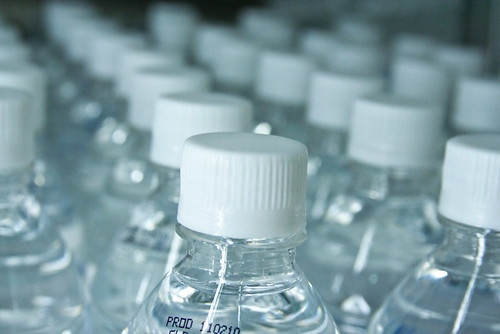
As an average American citizen, I recognize that I am often somewhat wasteful. Living in a medium-sized city in a first world country means I often take for granted money and resources that are so precious to less fortunate people around the world. I try my best to conserve resources and preserve our environment, but I'll be the first to admit that it is difficult, and I'm nowhere near perfect. However, there is one particularly wasteful habit I refuse to develop: drinking bottled water. The manufacture and consumption of bottled water wastes money and resources, and it is harmful not only to our environment, but to our own health as well.

From Flickr by stevendepolo
Fact: bottled water is less regulated than tap water. This means that while the manufacturers of tap water are required by law to provide their source, bottled water producers are not. While tap water is strictly tested for traces of the E. coli bacteria, bottled water is not. While tap water distributors must produce a quality report, the quality of bottled water is largely a mystery. Because commercially bottled water frequently does not cross state lines, about 70% is not subject to FDA testing or regulation. This blatant lack of supervision over such an unfortunately popular product could have serious implications for human health. Bacteria could be present in unhealthy amounts in such an unregulated item, and the plastic bottles may leach chemicals into the water if reused or left in the heat. Although this risk is uncertain and evidence of serious negative effects has not yet been officially uncovered, drinking water from the tap is a safer, if slightly less convenient, way to hydrate our bodies.

Not only is our health threatened by bottled water, but our wallets are in danger as well. Bottled water is ten thousand times more expensive than tap water. Let me repeat that: ten thousand times more expensive. In the United States especially, municipal water supplies are very cheap for the consumer. Bottled water, on the other hand, is enormously expensive. We—the consumer—aren't paying for the water itself when we hand over one, two, even three dollars for that seemingly innocent bottle of H2O—we are paying for the seventeen million barrels of oil used each year to produce the plastic, the paper of the wrapper, and even the cardboard packaging for bottled water. In fact, 40% of bottled water comes straight from the tap, making it virtually free for the producer. All they have to do is wrap it up and charge the uninformed masses for the expensive waste and pollution they have generated.

From Flickr by KNOW MALTA by Peter Grima
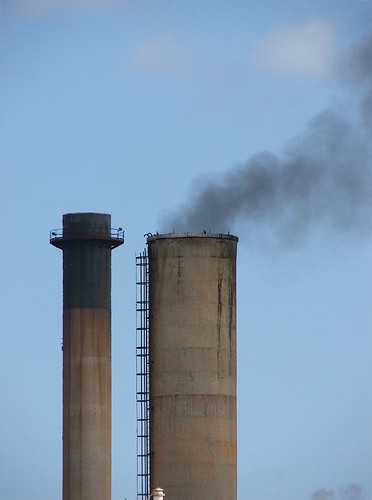
Such profligate behavior as this has serious consequences for our environment. Only one in five plastic water bottles is recycled. The other four are simply thrown away—that is, if they even make it to a garbage can. Bottled water is responsible for 1.5 million tons of plastic waste every year, much of which ends up in the ocean. In conjunction with plastic grocery bags, plastic water bottles have created an enormous floating trash island in the Pacific Ocean—and it is only growing. However, pollution to the land and ocean is not even the half of it. The process of bottling water requires three times more water than is actually in the final product, and freshwater is a dwindling resource. Only 2% of the world's water is freshwater, and most of that is trapped in glaciers. In addition, oil and other fossil fuels are wasted in the manufacturing of bottled water. Not only are we running out of fossil fuels—a nonrenewable resource—but burning this fuel is also detrimental to the environment. The combustion of fossil fuels releases carbon dioxide, which collects in the troposphere and increases the greenhouse effect, leading to the well-known phenomenon of global warming. With so many other sources—such as motor vehicles, industrial activity, and agriculture— advancing this environmental disaster, it seems idiotic to further contribute to greenhouse gas emissions for something as worthless and wasteful as bottled water.

Is the convenience of a portable and disposable container of hydration worth the high health, financial, and environmental costs? I don't think so. To me, the choice is obvious: purchase a sturdy metal or plastic water bottle and fill it with tap water before you leave the house in the morning. You can refill it at school from the water fountains or at work from the water coolers. You really only have to use it a few times before it pays for itself. I know there are much more serious and pressing issues out there than the good ole bottled water vs. water bottles debate, but when it comes to preserving and protecting our planet, every little bit counts. In the words of an ancient Native American proverb: "Treat the earth well: it was not given to you by your parents, it was loaned to you by your children."

Works Cited
Baskind, Chris. "5 reasons not to drink bottled water | MNN - Mother Nature Network." Environmental News and Information | MNN - Mother Nature Network. Mother Nature Network, 15 Mar. 2010. Web. 17 Jan. 2011. <http://www.mnn.com/food/healthy-eating/stories/5-reasons-not-to-drink-bottled-water>.

"The Facts About Bottled Water." Online Education : Colleges, Universities, Schools, Courses, & Degrees. Online Education, n.d. Web. 17 Jan. 2011. <http://www.onlineeducation.net/bottled_water>.